
A journey of art, science, collaboration, and hope
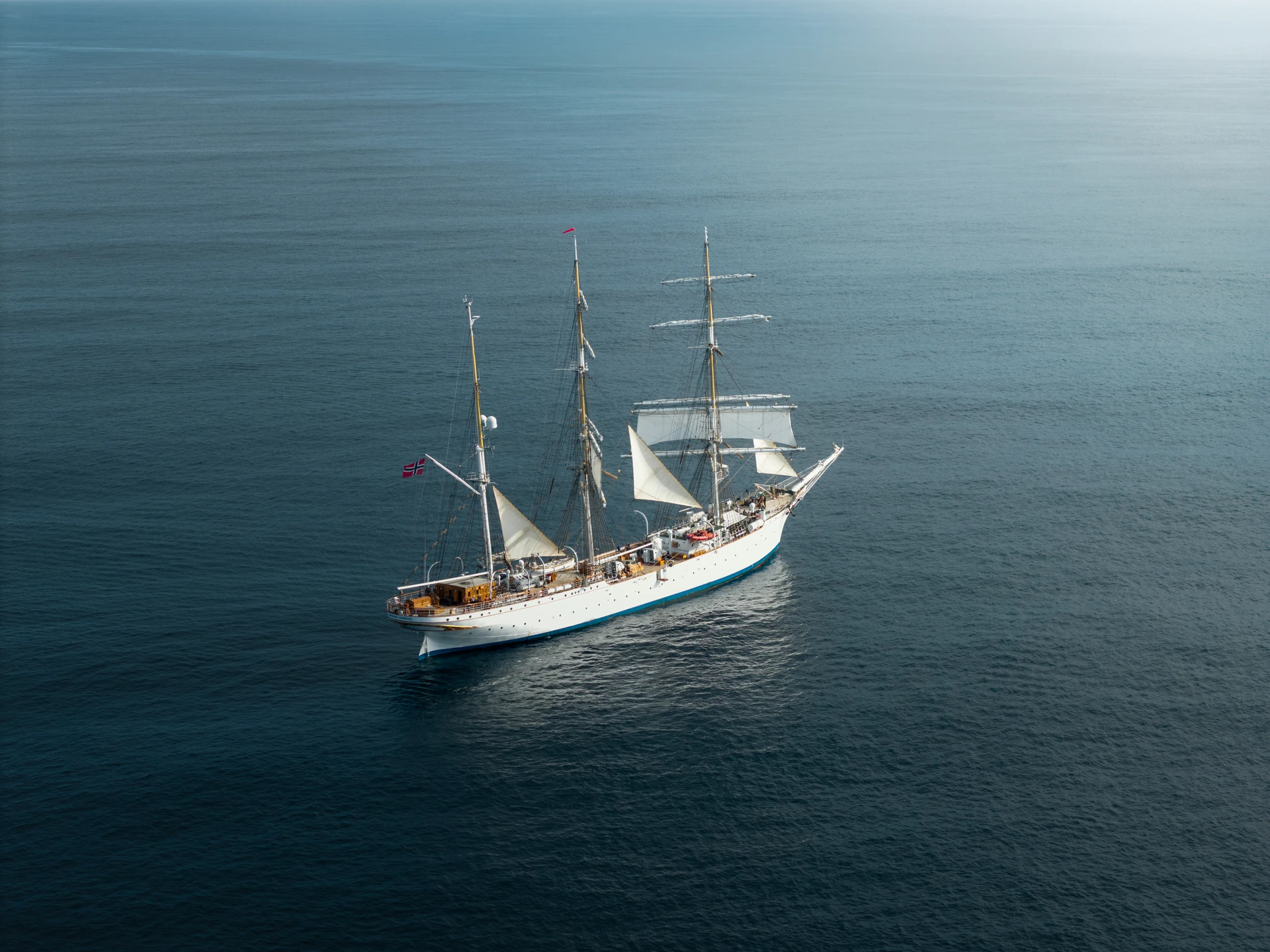
Photo credit: Iván Sepúlveda
In November 2025, six members of N-Gen —artists, scientists, and researchers from the Sonoran Desert—joined the One Ocean Expedition, sailing aboard the Norwegian sailing ship Statsraad Lehmkuhl, a century-old vessel and global ambassador for the UN Decade of Ocean Science, which seeks to promote ocean science and international collaboration.
For our community in the Sonoran Desert, this experience was not only a journey across the Pacific, but also a space where science, art, and community came together to generate knowledge, collaboration, and action, from the desert to the sea.
During eight days of sailing from Ensenada to La Paz, the ocean provided a common language. For many, this was their first time sailing on the high seas. The immensity of the ocean, the silence of the night, and the close coexistence produced an experience that is difficult to put into words. The sea revealed vulnerabilities, but also a renewed sense of purpose.


From left to right: Iván Sepúlveda, Adrián Munguía, Captain Jens Joachim Hiorth, Caitlyn Hall, Audrey Carver, Víctor Ricardez, Joel García Mayoral, Edgar Pimienta
Night watches, changing winds, team-hoisted sails, and a deep harmony created a space for learning and creativity. Researchers, artists, students, environmental managers, and the creative young people aboard found a space where their languages could meet. The different disciplines intertwined organically to imagine more resilient futures together and reaffirm that the ocean is an essential part of the biocultural territory we protect.
These are some reflections our participants shared upon their return.
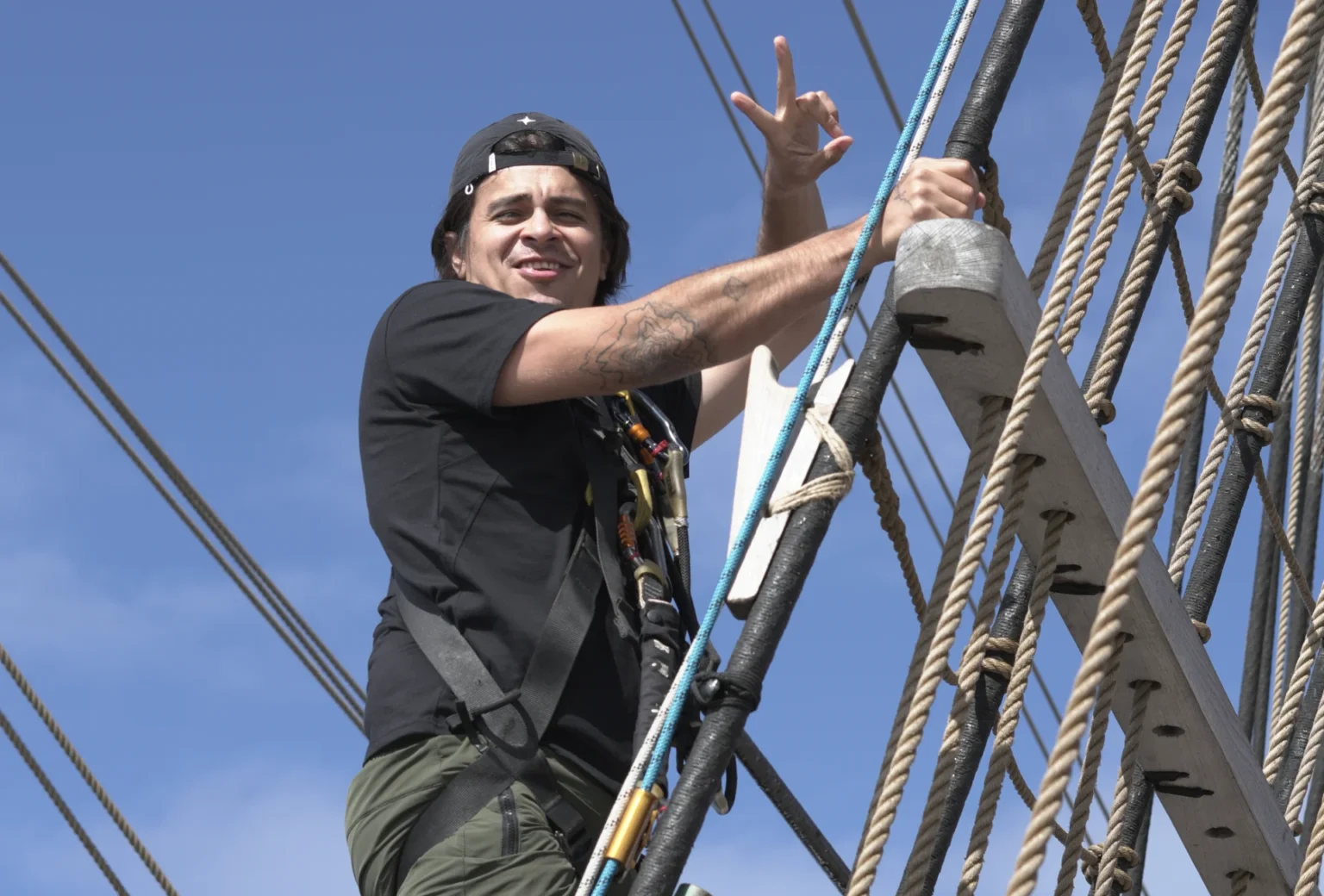
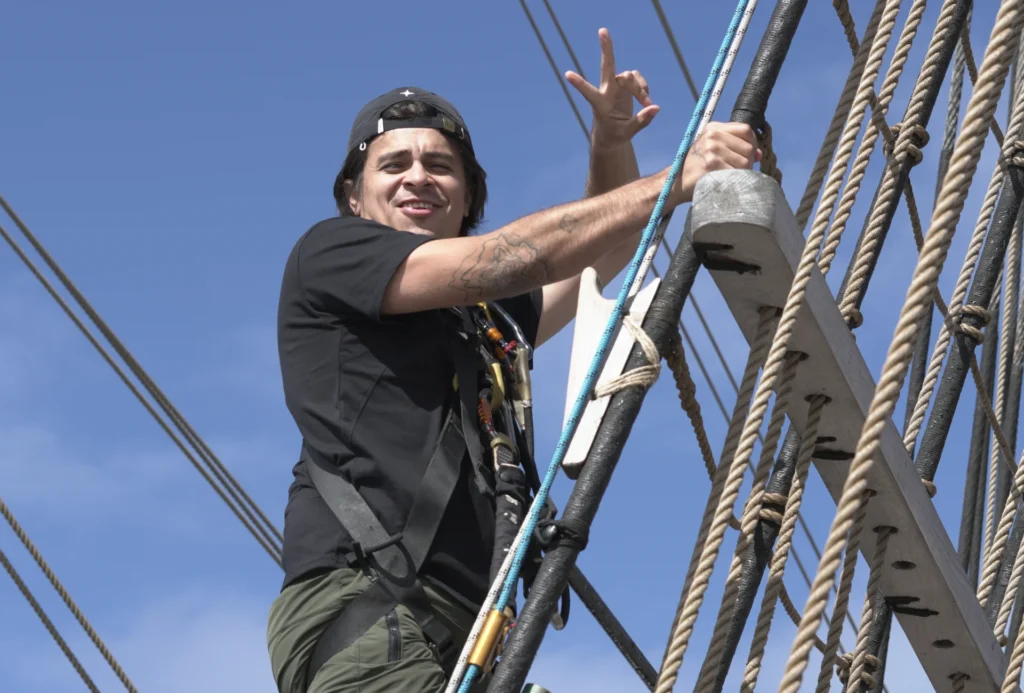
Architect, illustrator, and member of the N-Gen Board of Directors
“And I understood something simple: if we all pull [si todos jalamos] in the same direction, in sync, we can join forces and move toward a better future.”
— Edgar Pimienta
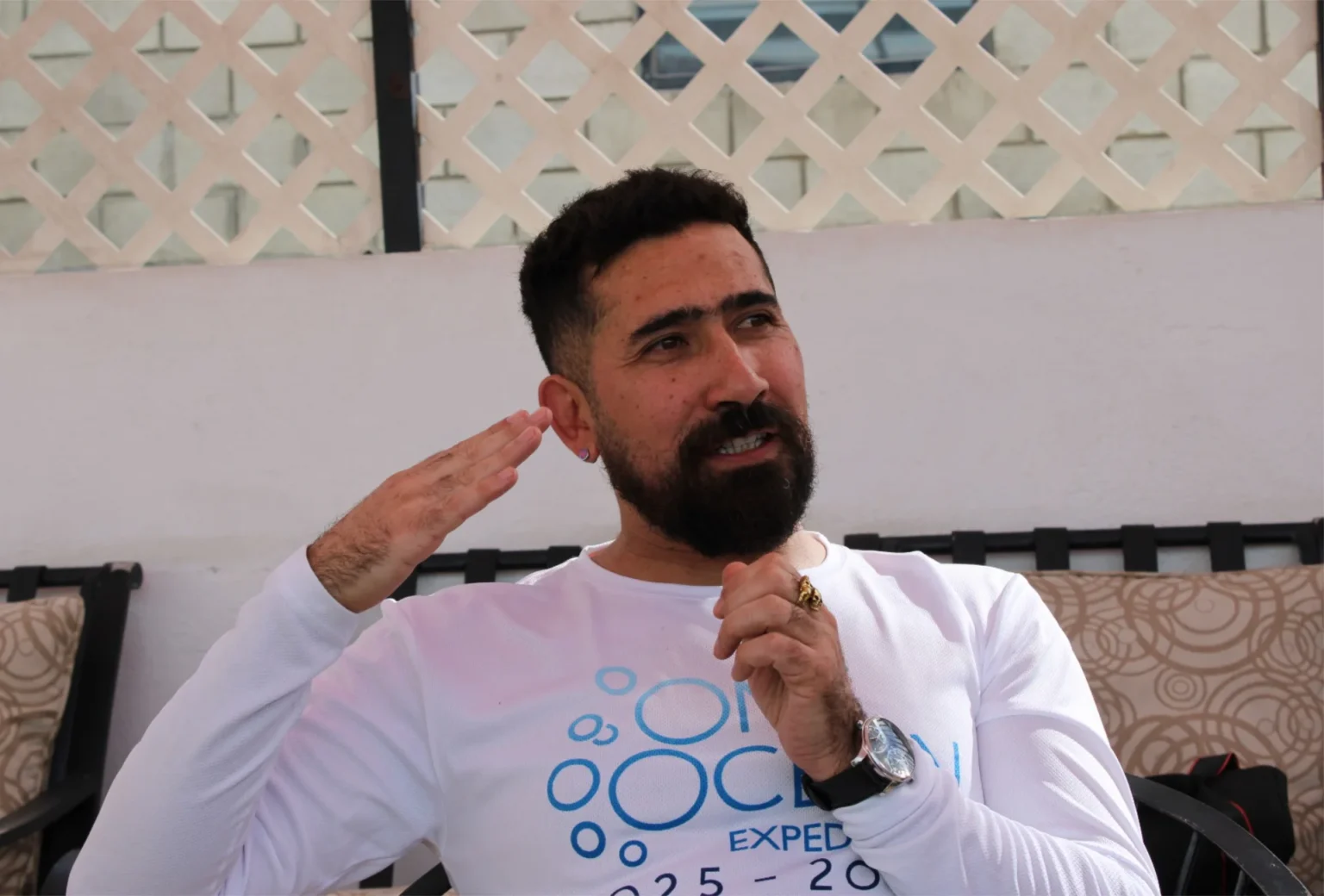
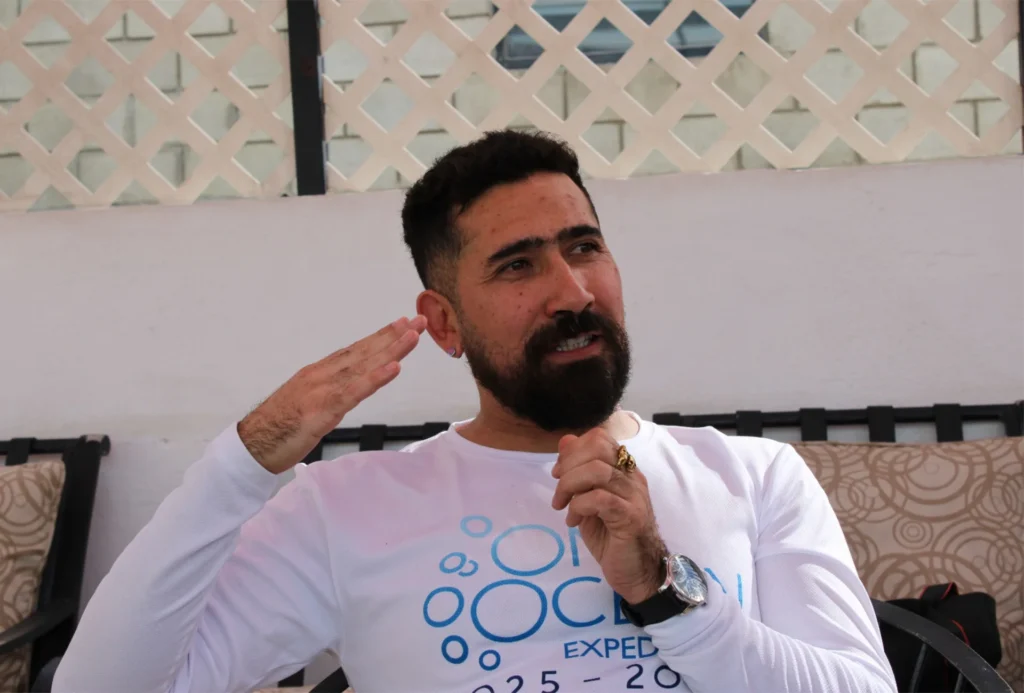
Social anthropologist and Associate Director of N-Gen
“With the support of photographers and illustrators, we also confirmed that science alone is not enough, and that (…) certain understandings can only emerge from aesthetics, sensitivity, and those silences — moments of pause and reflection — that logic cannot reach.”
— Víctor Ricárdez
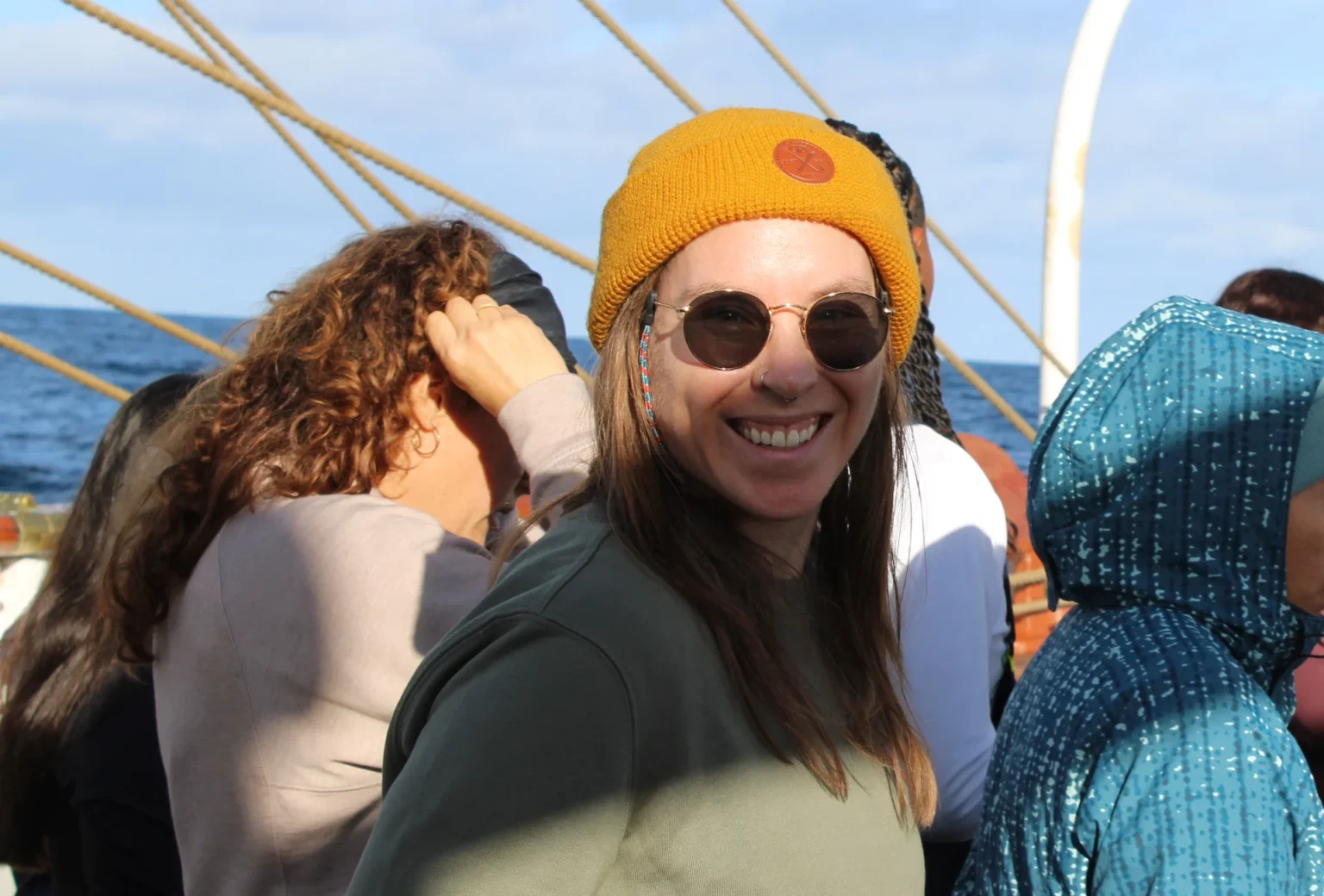
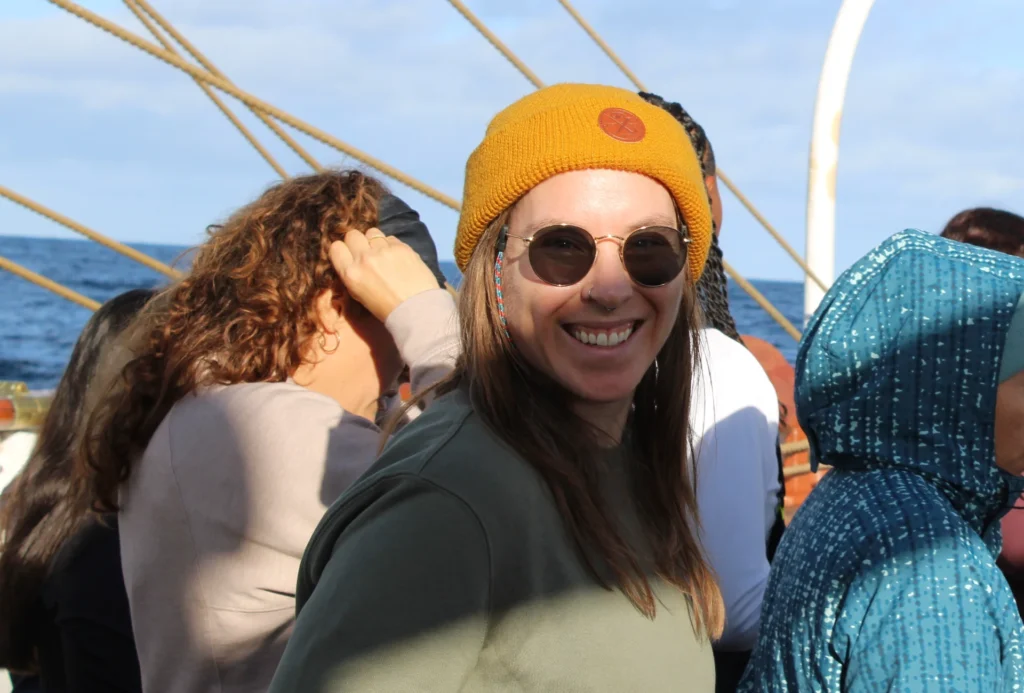
Researcher and member of the N-Gen Board of Directors
“The Sonoran Desert community has always been cross-border, cross-disciplinary, and deeply connected. This voyage strengthened that network in a way that feels both personal and collective.”
— Caitlyn Hall
Photographer
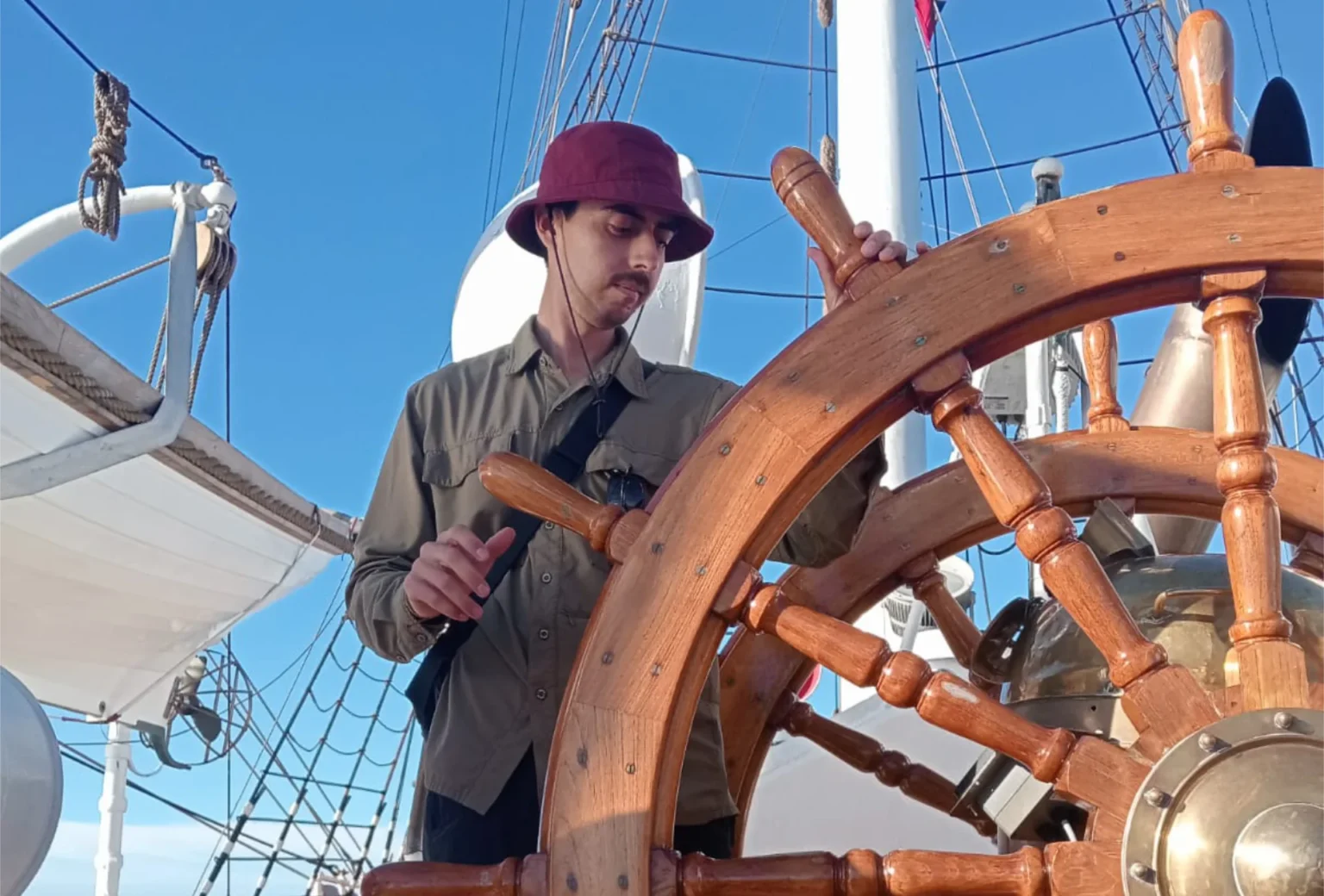
“In our case, the Sonoran Desert is our sailboat. Together, let’s ensure that our vessel endures and sails toward better horizons.”
— Iván Sepúlveda
Visual artist
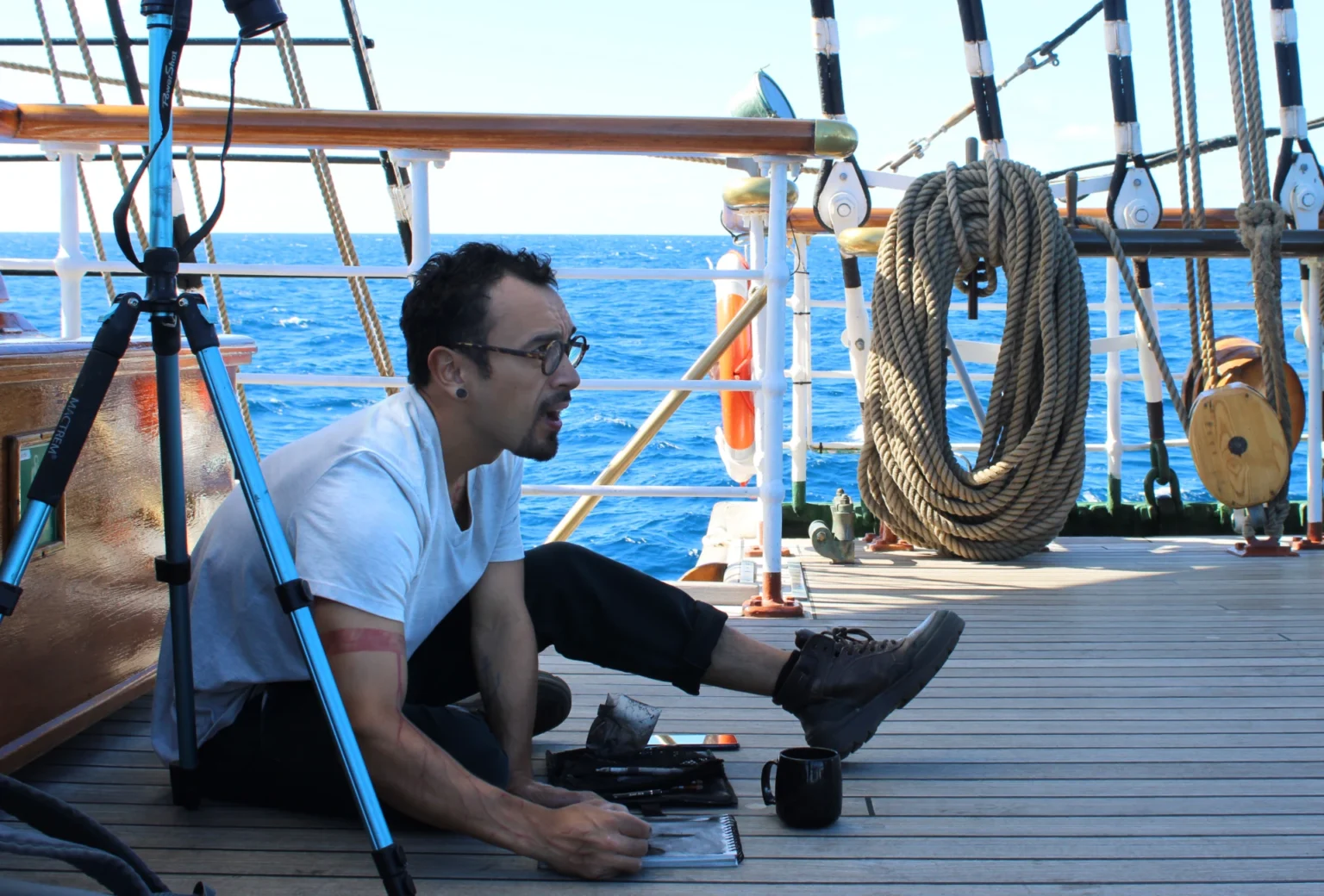
“I see all this as a great link where art can really connect the public’s attention to what the researchers of the Sonoran Desert have worked so hard on.”
— Joel Mayoral

Visual artist
“I came home with the sense that art and science really do belong together, and that there is space for people like me to help build that bridge.”
— Audrey Carver
“Jalo” is a northern concept we use to accept an invitation or show willingness to participate in something. At the beginning of this year, I decided that this word would define my actions. So, when the opportunity arose to join the #OneOceanExpedition aboard a century-old sailboat that travels the world, I accepted without hesitation.
With what little I knew about the expedition, I was excited by the idea of drawing and promoting art in the middle of the ocean, on a boat full of science, history, and people from the region and other countries, sailing the Pacific Ocean off the Sonoran Desert.
I never dreamed of being on a sailboat or going so far out to sea, but the experience was surreal, like living in a dream. At night, reality was distorted: the horizon disappeared into the darkness, and the sky and sea became one. I felt like I was floating in space, among stars and bioluminescence.
I also felt like I was traveling through time. The history of the Statsraad Lehmkuhl, coupled with its impeccable condition, transports you to the past and allows you to imagine how its first sailors felt. But it also launches you into the future every time you exchange ideas about how to inhabit the territory or how to preserve our seas with experts who are passionate about what they do.
A big part of the experience was learning to sail. We learned Norwegian terms that helped us coordinate as a team. At the sound of “Hal tight!” we all pulled on the ropes to tighten the sails and keep moving. And I understood something simple: if we all pull [si todos jalamos] in the same direction, in sync, we can join forces and move toward a better future.
Gran parte de la experiencia fue aprender a navegar en un velero. Conocimos términos en noruego que nos ayudaban a coordinarnos como equipo. Al sonido de “Hal tight!” todos jalábamos de las cuerdas para tensar las velas y mantenernos en movimiento. Y entendí algo simple: si todos jalamos hacia el mismo rumbo, sincronizados, podemos unir fuerzas y avanzar hacia un mejor futuro.
The sea is a vital part of the Sonoran Desert. Sailing on this boat had a purpose, even though we hadn't planned it: to share our love for the sea and its biodiversity. Norway's most magical sailboat made us feel special, but also responsible: responsible for conveying what we experienced on board and for remembering the importance of the sea in our lives and in the territory we inhabit.
Hopefully, the artistic and scientific perspectives that each crew member shares about this voyage will convey the essence of the journey. And that, when it reaches our readers, that message will awaken in them what it awakened in me: a deep and renewed love for the sea.
Between Ensenada, B.C. and La Paz, B.C.S., along the long blue corridor of the Mexican Pacific, I experienced one of the most transformative moments of my life. I was part of the One Ocean Expedition, a global effort that seeks to bring ocean science closer to society and remind us that the survival of our species depends on the health of the ocean just as much as on the air we breathe.
Thanks to Fundación iAlumbra and the dedication of everyone who made this journey possible, we boarded the Statsraad Lehmkuhl, a century-old sailing vessel built in 1914 and an official ambassador of the UN Decade of Ocean Science. For eight days and seven nights, we learned to read the wind, to tension the lines in sync, and to listen to the polyphony of rhythms, knowledges, and worlds that coexist at sea.
Disconnected from email and social media, researchers, aquaculture producers, and leaders from diverse civil society organizations in this transboundary region were able to truly coexist, exchange ideas and emotions, hold workshops, and identify opportunities to strengthen our shared efforts for conservation and inclusive sustainable development. Very quickly, we understood that this voyage was not a destination but the beginning of a shared adventure toward a more just and livable future for all forms of life.
Captain Jens Joachim Hiorth and his crew welcomed us with firm and generous hospitality. On deck, they taught us that at sea, collaboration is not an abstract value but the only condition that allows everything to function properly. Standing watch, hoisting sails, cleaning the deck, and orienting ourselves under the star-filled sky all require coordination and commitment from everyone aboard. In that environment, interdependence becomes tactile. It is rope, knot, wind, body. It is shared responsibility.
Aboard the ship, we were also the sea. An ocean of mysteries and uncertainties, of expectations and dreams. Fragilities that, working together, transformed us into a pack, a tribe, a clan. Once I overcame the astonishment and exhaustion of the first watch -from midnight to 4:00 a.m.- I shared some of the happiest moments of my life, shoulder to shoulder with those who, while keeping the plotted course, watching the horizon, hoisting sails, and blistering our hands on the lines, danced and sang with me until dawn.
As Associate Director of the Next Generation of Researchers of the Sonoran Desert (N-Gen), I experienced this journey as a true laboratory of possible futures, inhabiting a multicultural space—almost a time machine—where artists, scientists, students, and decision-makers tested new ways of collaborating. With the support of photographers and illustrators, we also confirmed that science alone is not enough, and that—as Han Kang suggests in Greek Lessons—certain understandings can only emerge from aesthetics, sensitivity, and those silences — moments of pause and reflection — that logic cannot reach.
As we advanced through deep waters, it was impossible to ignore the global context that surrounds us. We live in a civilizational crisis expressed through wars, forced displacement, militarized borders, hate speech, expanding authoritarianism, and environmental degradation that threatens the foundations of our existence.
In Latin America, this crisis becomes especially stark: Indigenous territories devastated by megaprojects, armed violence intertwined with extractivism, and entire communities disappearing into statistics incapable of naming the pain. The daily life of millions unfolds amid precarity, fear, and loss.
In this landscape, the voyage became a silent yet resolute declaration. In a world where democracy erodes and life grows fragile, the ship reminded us that it is still possible to build relationships rooted in mutual care, cooperation, and empathy. That even in the midst of the civilizational storm, there are spaces where listening becomes a political act and collaboration, a gesture of resistance – a practice of peace in motion.
The sea does not conceal the crisis—it reveals it, making it impossible to forget the global context even while living an extraordinary experience in the middle of the ocean. At the same time, it hints at fragile fractures of hope. Each wave suggests that we can still imagine a different way of inhabiting the planet, one that understands there is no human well-being without ecosystem well-being.
During the quietest hours, I carried with me The Mushroom at the End of the World by Anna L. Tsing, a work that explores—through precise and luminous prose—the links between civilizational crisis, political imagination, and the small forms of resistance that still sustain what is yet to come.
Influenced by that reading, I soon noticed that every being on the ship—and around the ship—had its own rhythm. The shifts on watch, the footsteps on deck, the nighttime conversations, even the birds, dolphins, and whales that accompanied us at times, and the waves striking the hull like an ancient pulse.
Anna Tsing would call this multiplicity a polyphonic assemblage, a form of coordination that does not require uniformity, but rather coexistence among differences. Inspired by this idea, we experimented with different sonic watch-change rituals, small tributes to the planet's diversity and to the polyphony that the expedition itself embodied: a space where science conversed with art, where technique met intuition, and where diversity became possibility. A place where the sea taught us, patiently, that there is no future unless we learn to row—and to live—together.
Five days have passed since I returned home, to the space my partner, our dog, and I have built together. As I resume the tasks waiting on my desk, I keep trying to absorb what I lived. I have not ceased to be myself, but for some reason, I do not feel like the same person who boarded the ship twelve days ago.
As I write these lines, the Statsraad Lehmkuhl continues toward Panama. It is expected to arrive in Herradura, Costa Rica, on December 9. My heart sails with the crew. I know we will soon have concrete results from the measurements of temperature, salinity, microplastics, currents, marine biodiversity, and productivity being gathered throughout the expedition—data that will reveal patterns, processes, and signals we can only intuit today. My spirit longs to return to the sea.
I also know that, in retrospect, journeys always give us more than we expect. And while I continue reflecting, I would like to share two simple moments that helped me deeply understand what it means to live collectively.
The first took place before dawn. After finishing my watch at four in the morning, I showered and fell asleep. When I woke, I realized I had missed breakfast. I understood then that I could not eat whenever I wanted—that aboard the ship, time is not personal but communal. Respecting schedules is part of the mechanism that keeps the vessel running, and delaying a meal means delaying the activities of everyone else and unsettling the rhythm that allows everything to function.
The second moment had to do with laundry. One afternoon I tried to wash my clothes, but the washing machines and dryers were occupied, so I did not insist. I waited. The next day, after completing my early-morning watch, I took advantage of the quiet dawn to wash, dry, and fold my clothes. I stayed on deck, accompanying the next watch while finishing the task. I understood that I could not leave my laundry half-done nor occupy space someone else might need. That seemingly trivial gesture made me realize that even the simplest actions are interwoven with collective needs.
Both experiences—everyday and revealing—helped me grasp an essential truth: if we are all in the same boat, we must think and act collectively. And that boat, as we well know, is the only planet we have.
This is why the most obvious metaphor of the voyage is also its most powerful one. We are all in the same boat. A phrase repeated so often that it sometimes loses meaning, yet at sea it acquires a different weight. No life is sustained alone.
From that realization emerges an ethical imperative: to act for the collective good, for all species, for the ecosystems that allow life, and for the futures we can still build together.
We are fragile creatures, interdependent, profoundly connected to one another. And paradoxically, it is precisely that shared fragility that opens the door to collaboration, empathy, and hope.
This expedition was a transformative experience for me, and it has been grounding to hear how many others felt that same shift once we returned home. Life on the ship created a momentum you could feel in your bones, the kind that comes from working, resting, and laughing in the same rhythm. There was shared vulnerability and shared wins, especially during the final night’s dance party when everyone let go and celebrated what we had built together. Those moments taught me that growth and struggle live side by side and reminded me that we are all reaching toward similar goals even when our disciplines and perspectives are different.
What stays with me most are the relationships that formed in the quiet, ordinary corners of the voyage. We did laundry in pairs, sleeves rolled up, coaxing warm water from a faucet that never quite cooperated. We looked for one another during night watches, stepping onto the deck with that mix of fatigue and anticipation, hoping to spot a familiar silhouette in the dim red light. There was something beautiful about how we shifted from simply knowing people’s names to really seeing them, considering them, understanding what they carried with them into this shared space. By the time we reached shore, the inside jokes had settled in, the easy trust had taken root, and the conversations felt richer because we had already lived a stretch of our lives together.
As part of our N-Gen project, I carried out interviews throughout the voyage to understand the human side of this expedition. The goal was simple: listen to people’s stories, their motivations, their moments of doubt or surprise, and how being on the ship shaped them. Sitting with people one on one, I watched perspectives stretch and soften. Several spoke openly about realizing their hubris as researchers stepping into a new environment. Others said the experience cracked something open for them, that the beauty and discipline of sailing made them reconsider the boundaries of their work and their lives. Some walked off the ship with the sense that their trajectory might need to expand, that curiosity could pull them into new communities and new ways of learning.
This opportunity also showed me what it looks like when researchers, artists, and storytellers move together toward climate resilience with shared purpose. The Sonoran Desert community has always been cross-border, cross-disciplinary, and deeply connected. This voyage strengthened that network in a way that feels both personal and collective. I left with a sense of possibility that is still very alive, and I know the experience continues to shape the work we do, individually and together, long after we stepped off the ship.
This experience was very special to me. To say that I was aboard Norway's largest and oldest sailboat does not begin to describe what I really experienced there.
From the moment I stepped onto this majestic vessel, I could only imagine what it would be like to travel the world on a vehicle that has the ocean and the wind as its best allies.
One of the most meaningful parts for me was being part of the Red Watch, the group in charge of taking control of the sailboat from midnight to 4 a.m. Our first watch was on the coldest night, with constant rain that made everything a little more difficult. Even so, no one gave up. We all supported each other to stay on course.
Amidst the rain and cold, the moment we had been waiting for arrived: the moment to hoist the first sails. The ship began to come to life, as if it was waking up. However, it wasn't until a couple of days later that the wind blew strongly enough to open the large sails.
Something I think is important to mention is that, although some were people of science and others of art, each different in their own way, the soul of the ship and the ocean united us equally. We all moved in the same direction: the well-being of the ship, the crew, and our seas.
What I take away from this experience is the certainty that, no matter how different our disciplines or ways of thinking may be, when we share a common intention or concern, we can come together to contribute our perspectives and seek solutions. Some of us will do so through art, others through science, but we will always achieve a greater impact when we combine our strengths.
In our case, the Sonoran Desert is our sailboat. Together, let's ensure that our vessel endures and sails toward better horizons.
A journey that began before I woke up and continues, even if I have to watch it from the ground.
This journey showed me how life should be. Hold on tight, even if your body doesn't respond, let go when necessary, and raise your hands to the sky and applaud when you've made it. I say goodbye to eight suns to find the truth between the deepest and darkest blue. I want to return to this place and listen to the message between the breaking of the wind and the ringing of the bell. I say goodbye to new friends with whom I barely had time to chat and eat, to admire and be surprised by so much obsession and passion. Here I was nothing more than a simple crew member where I am not needed, but my absence is noticeable. I feel fulfilled and eager to return home, but also to take my whole home with me to this new refuge.
In this immensity where we are nothing, the wind dries my tears of nostalgia, because this was another dream come true. A dream I had all my childhood, and now it is a memory that accompanies me in my worn hands and some scars that I would not want to be erased as evidence that this happened.
Being part of this crew made me understand the true meaning of teamwork and the importance of taking my role on this trip seriously, realizing that it was just as important to rest and eat enough to be able to perform well the next day as it was to work hard. One of my favorite activities on board was climbing the masts, although I can't deny that it was very scary and exhausting. Another activity that was undoubtedly very significant was sharing my painting process with my companions. I realized the impact my work had on the sensibilities of my new friends. Near the end of the trip, I had the opportunity to share all the paintings I had done on board, and thanks to that, I was able to connect deeply with the community. It was very beautiful for me because I understood that some of them would never see those paintings again after this trip.
I see all this as a great link where art can really connect the public's attention to what the researchers of the Sonoran Desert have worked so hard on.
This journey touched very sensitive fibers, not only in myself but also in my companions. I hope that this small grain of sand can contribute to raising awareness about the care, attention, and preservation of the seas and oceans. Just as all the researchers, sailors, and people involved have filled this little hole in my heart.
The One Ocean Expedition with N-Gen was one of the most amazing experiences of my life. I had never sailed before, never really been on a boat, so stepping onto the Statsraad Lehmkuhl felt like walking into a whole new world. I knew the ocean was vast, but I didn't expect the way it would make me feel small in a good way, like I had been folded into something bigger than myself. There was a kind of childlike awe in all of it. I kept thinking of the adventures I watched growing up, all those Planet Earth expeditions that made me dream about this sort of thing. Being out there, surrounded by water and sky with no land in sight, felt like meeting that younger version of myself again and letting her finally have what she'd been waiting for.
The ship itself is a work of art, and learning the traditional rhythms of sailing made the experience feel even more timeless. Sleeping in the banjeur hammocks with half the expedition crew was something I'll never forget. It was chaotic and cozy and strangely grounding. Every day brought a new moment like that. Seeing the research happening on board, listening to people talk about their work with communities around the world, and realizing how deeply they cared about ocean health and protection was incredibly inspiring. I had no idea people would be coming from so many countries, each with their own way of thinking about stewardship, resilience, and the ocean's future. That breadth of perspective was one of the best parts of the trip.
As an artist and science communicator, it can be hard to find spaces where people genuinely welcome an interdisciplinary approach. So much of my work is shaped by plants, people, and the ways we interact with living systems. Lately I've been thinking a lot about botany and kelp, about how humans build relationships with ecosystems, and the trip gave me the room to carry that curiosity onto the deck of a ship. Being outside, seeing wildlife, learning from others, and watching how they connect with the world around them is where most of my inspiration comes from. To step into a space where that blend of art and science wasn't unusual but encouraged felt validating in a way I didn't realize I needed.
What I am most grateful for is the community that formed so naturally. I showed up nervous about everything from seasickness to not knowing anyone, and those worries faded quickly as conversations unfolded and friendships took shape. I met other artists and people who live in the same niche I care about, people who understand why blending fields feels necessary rather than optional. I left the expedition feeling more connected to my work, to the people doing this kind of work around the world, and to the ocean itself. I came home with the sense that art and science really do belong together, and that there is space for people like me to help build that bridge.