

May 13, 2026
The Sonoran Desert
To the relevant federal, state, and municipal authorities,
In recent weeks, we have witnessed an incredible outpouring of concern and clarity regarding the potential harm that could result from the presidential decree authorizing the reclassification of the Port of Loreto as a deep-sea and coastal port (Puerto de Altura y Cabotaje). The diverse local communities of Loreto are speaking as one against the dramatic change this would bring, not just to Loreto, but the Gulf of California as large.
For the past three decades, Loreto has built a model of low-impact, high-value tourism based on responsible whale watching, sustainable sport fishing, kayaking, snorkeling, and wildlife observation within the islands of the national park.
Comparative studies of Mexican cruise destinations indicate that the average expenditure per cruise passenger ranges between USD $50 and $90 per visit (with stays of 4 to 8 hours and most purchases occurring onboard), compared to USD $800 to $1,500 spent by tourists who stay between 3 and 7 nights and consume local services.
The community argues that the economic benefits promised by the decree will not be shared fairly among the people of Loreto. Instead, they will mainly benefit large international cruise companies and tourism operators with concentrated capital, while the environmental and social costs will remain in the local territory.
The biological importance and value of the marine and coastal area or Loreto have long been recognized by robust and extensive scientific literature, and the designation of the Parque Nacional Bahía de Loreto in the first place.
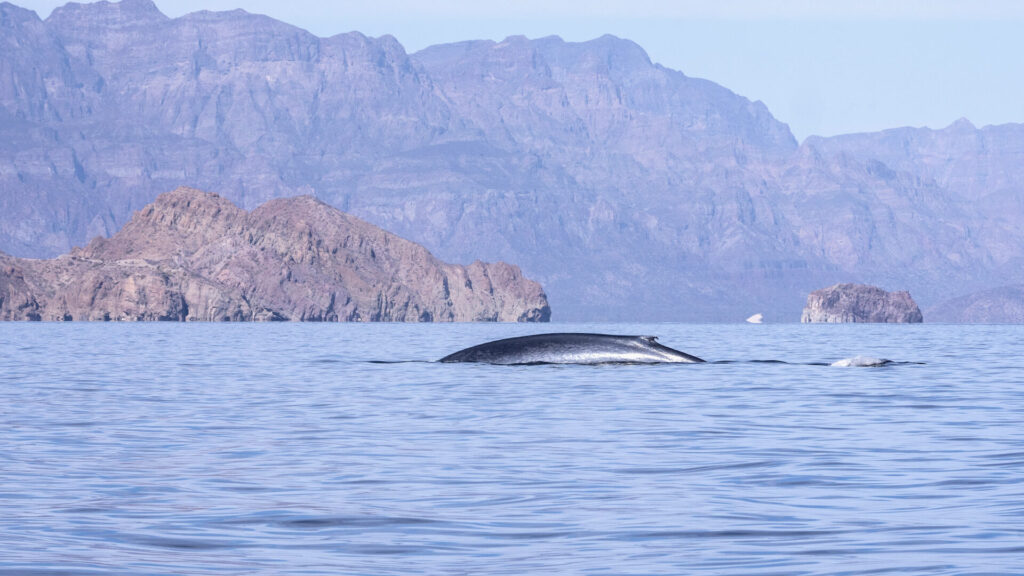
Loreto represents one of the most important marine ecosystems in the tropical eastern Pacific. The region is home to emblematic and highly vulnerable species, including the blue whale (Balaenoptera musculus), fin whale (Balaenoptera physalus), sharks, mobula rays, and sea turtles, all of which are included under Mexico’s NOM-059-SEMARNAT-2010 regulation concerning native wildlife species at risk.
The introduction and increase of large-scale maritime traffic would have far reaching and permanent negative social and biological impacts.
As representatives of a broad network that includes over 1,500 researchers, artists, and community leaders committed to science and conservation of the rich social and biological landscape of the greater Gulf of California and Sonoran Desert, we respectfully ask the relevant local and federal authorities to reconsider and revoke this decree, ensuring strict protection of Bahía de Loreto National Park and compliance with current environmental legal frameworks.
We believe it is essential that any decision regarding the future of the Port of Loreto be grounded in transparent, participatory, free, and informed processes, based on independent scientific evidence, fully incorporating the voices of local communities, the principles of environmental precaution, and long-term sustainability criteria.
SINCERELY,
Board of Directors
New Generation of Sonoran Desert Researchers (N-Gen)
www.nextgensd.com/